BACKGROUND
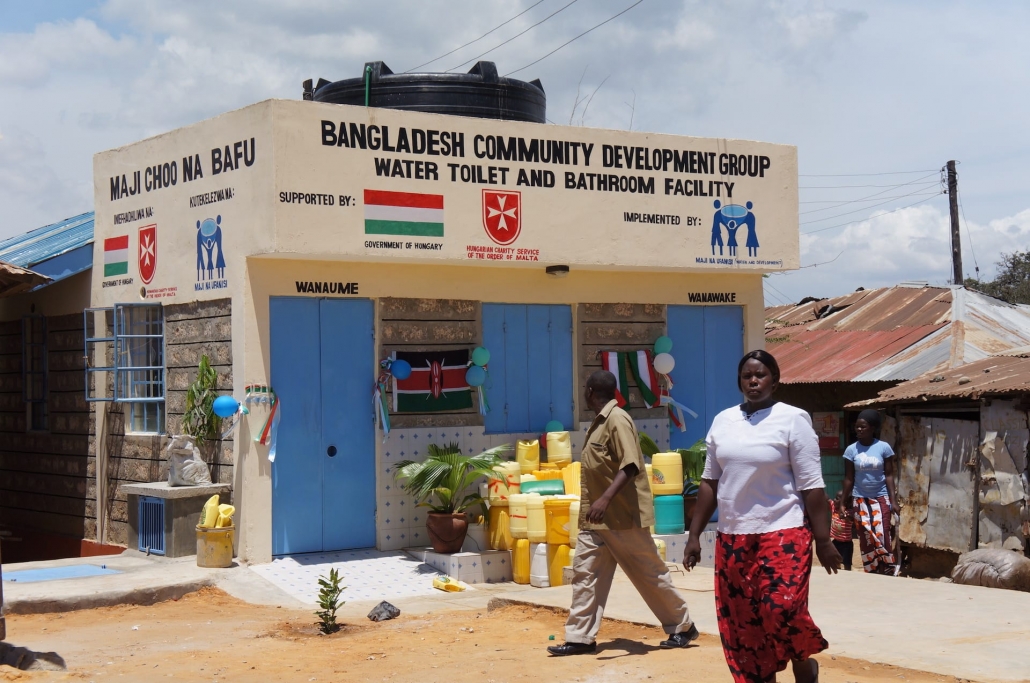
Within this programme, we aimed to establish a comprehensive hygiene centre in Bangladesh, a highly disadvantaged slum area of Mombasa. The condition of the settlement and the living circumstances of its residents are extreme even by local standards: basic hygiene needs cannot be met, as there is no sewage system and untreated biological waste poses a constant risk of infection, particularly for children.
In addition to the lack of hygiene services, residents are also deprived of another fundamental necessity: access to safe drinking water. Illegal groups, operating in cartel-like structures, divert approximately 70% of the city’s water supply from the municipal system and sell it back to residents at prices well above market rates. People pay however they can: some attempt to find formal employment in the city, while others rely on informal work or prostitution. By the time the water reaches the settlement through makeshift, damaged pipes, it is often heavily contaminated.
In these slums – often referred to as “informal settlements” in politically correct discussions – nearly all available water originates from illegal sources. As a result, a severe public health crisis has developed, with an estimated 40% of children not surviving beyond the age of five.
ABOUT THE PROGRAMME
DURATION
2012-2013
DONORS
Ministry of Foreign Affairs of Hungary and private donations
PARTNERS
Maji Na Ufanisi, municipal water authorities
BUDGET
15 000 000 HUF
OUR OBJECTIVES
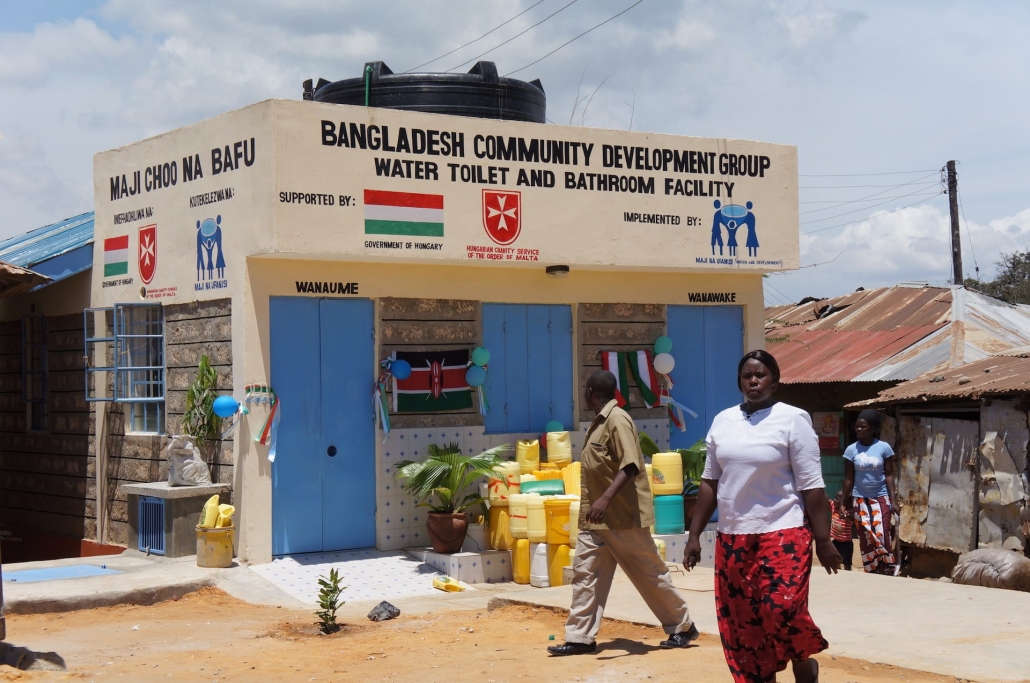
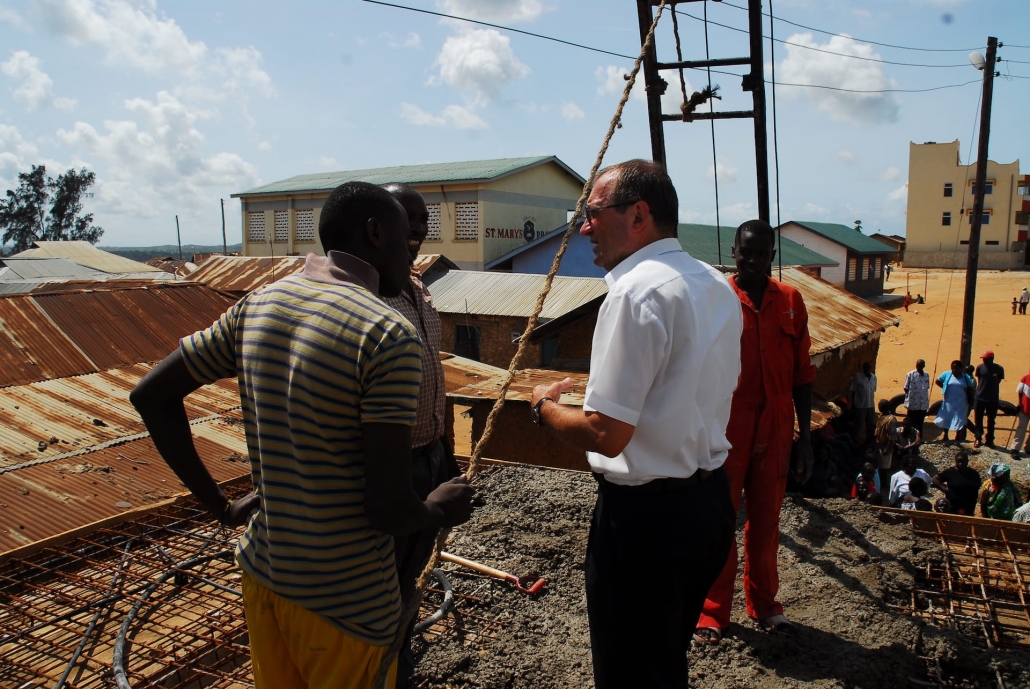
Building on the experience and approach applied in Kibera, the programme aimed to establish a permanent, community-operated facility providing comprehensive hygiene services, tailored to the needs of the local population, with particular attention to the most vulnerable groups: children, mothers and the elderly. The centre, constructed as a solid building with integrated facilities, provides access to safe drinking water and basic hygiene services for several thousand residents.
Notably, the Hungarian Charity Service of the Order of Malta was the first organisation to introduce piped drinking water into such a settlement in Mombasa. The newly established 15-kilometre pipeline is legally connected to the municipal water system. To ensure a stable water supply, the community operating the centre regularly fills rooftop storage tanks (with capacities to hold 10 000 litres of water) with water purchased from the public utility. Residents can then access water at a symbolic price, with revenues reinvested into the maintenance of the WASH facilities and the remuneration of operators.
HOW WE PROVIDE SUPPORT
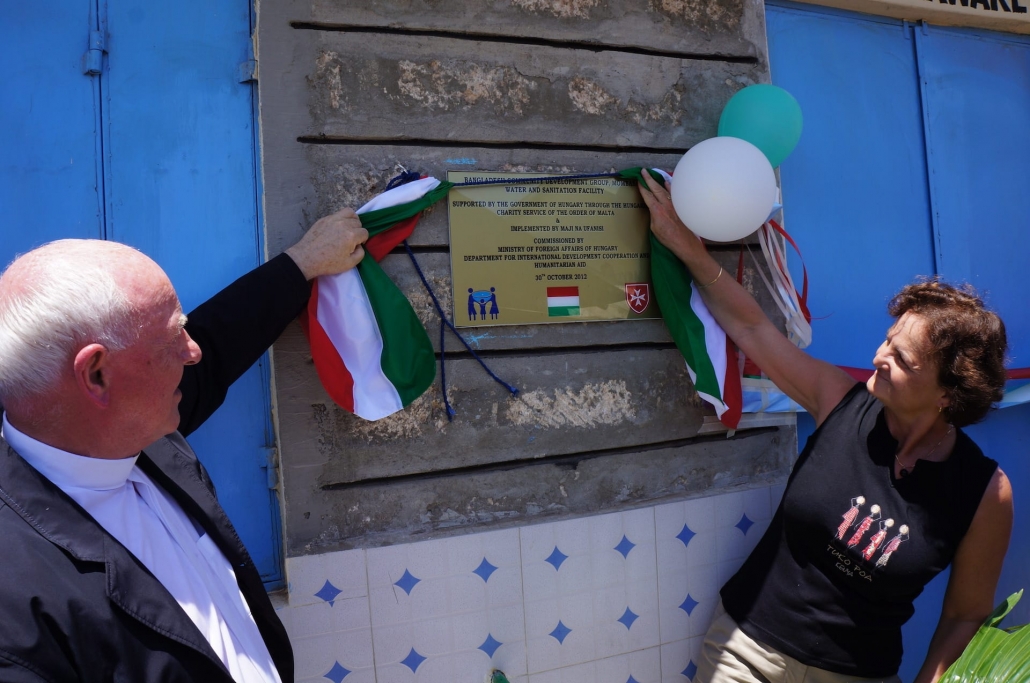
Through the project, we established a comprehensive sanitation centre in one of Mombasa’s most disadvantaged slums. The facility provides legal access to safe drinking water and essential hygiene services. In addition to water access, the centre includes six toilets and six showers to meet local needs. Furthermore, the project provides a 10,000-litre rainwater harvesting tank, a water circulation system, and a community training space for local residents. The centre is also connected to a sewage system, significantly reducing environmental pollution in the area. By ensuring access to clean water and basic hygiene services, the initiative contributes to improving the health of children and mothers, reducing the incidence of infection-related diseases and lowering maternal and child mortality rates.
GALLERY
The programme in pictures


National Headquarters
Department of Foreign Affairs
Hungary, 1011 Budapest, Bem rakpart 28.
Tel.: +36-1-391-4700
Fax: +36-1-391-4728
E-mail: nemzetkozi@maltai.hu