BACKGROUND
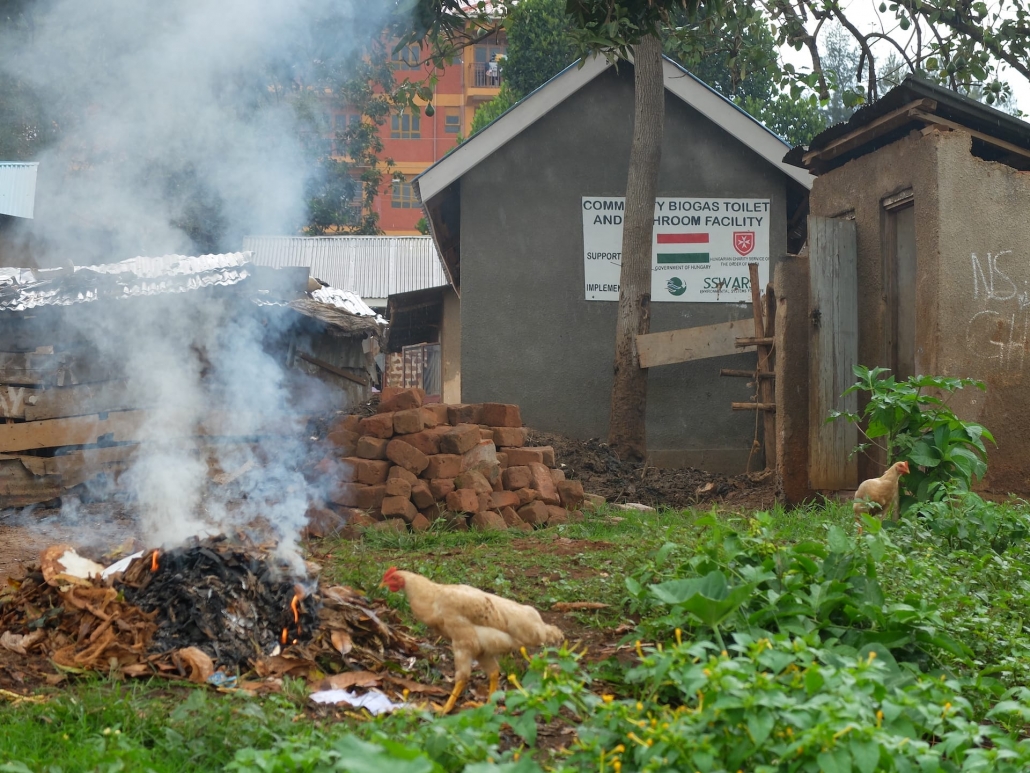
Within this programme, we implemented complex hygiene interventions in the Kironde Zone, a highly disadvantaged slum area of Kampala. The condition of the settlement and the living circumstances of its residents are extreme even by local standards: basic hygiene needs cannot be met, as there is no sewage system and untreated biological waste poses a constant risk of infection, particularly for children.
In addition, access to safe drinking water – a fundamental necessity – was not available to the community, as the settlement lacked a water network. The situation was further exacerbated by illegal groups organised into cartels, which diverted water from the municipal system and resold it at inflated prices.
ABOUT THE PROGRAMME
DURATION
2013-2014
DONORS
Ministry of Foreign Affairs of Hungary
PARTNERS
SSWARS, UWASNET
BUDGET
15 000 000 HUF
OUR OBJECTIVES
The programme aimed to establish facilities that provide comprehensive hygiene services in line with the needs of the local community, with particular attention to the most vulnerable groups: children, mothers and the elderly. The development ensures access to safe water, sanitation and basic household services for several thousand residents.
By enabling the proper disposal of biological waste, the centre not only directly improves living conditions and health status, but also significantly reduces ecological contamination in the area.
HOW WE PROVIDE SUPPORT
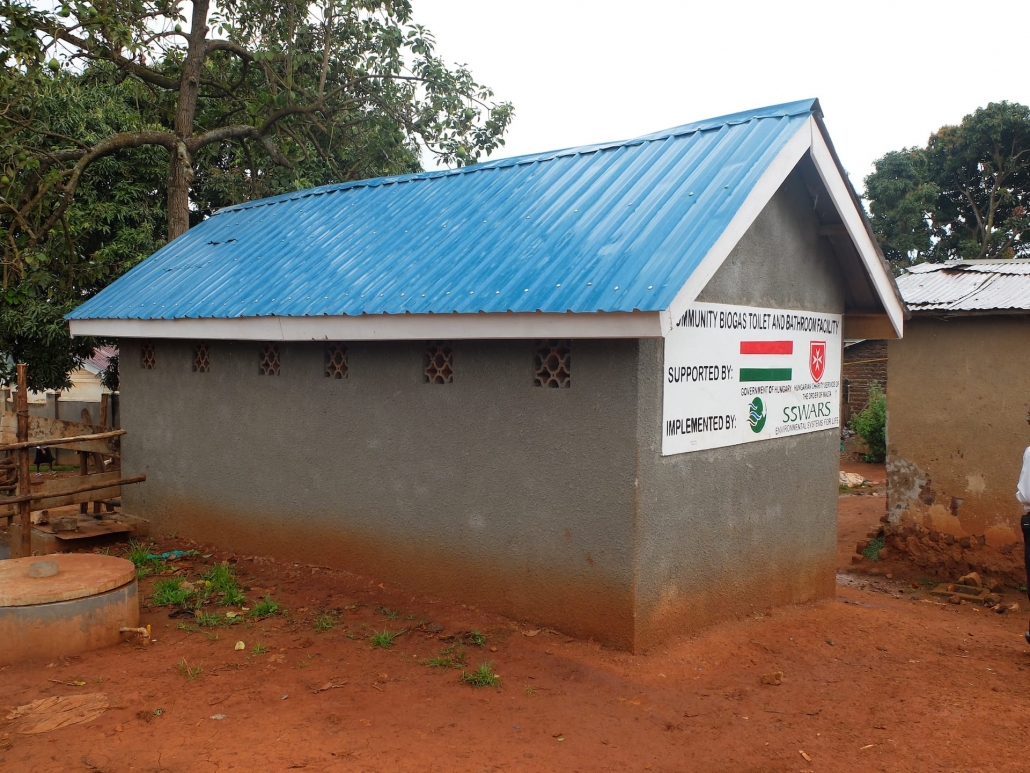
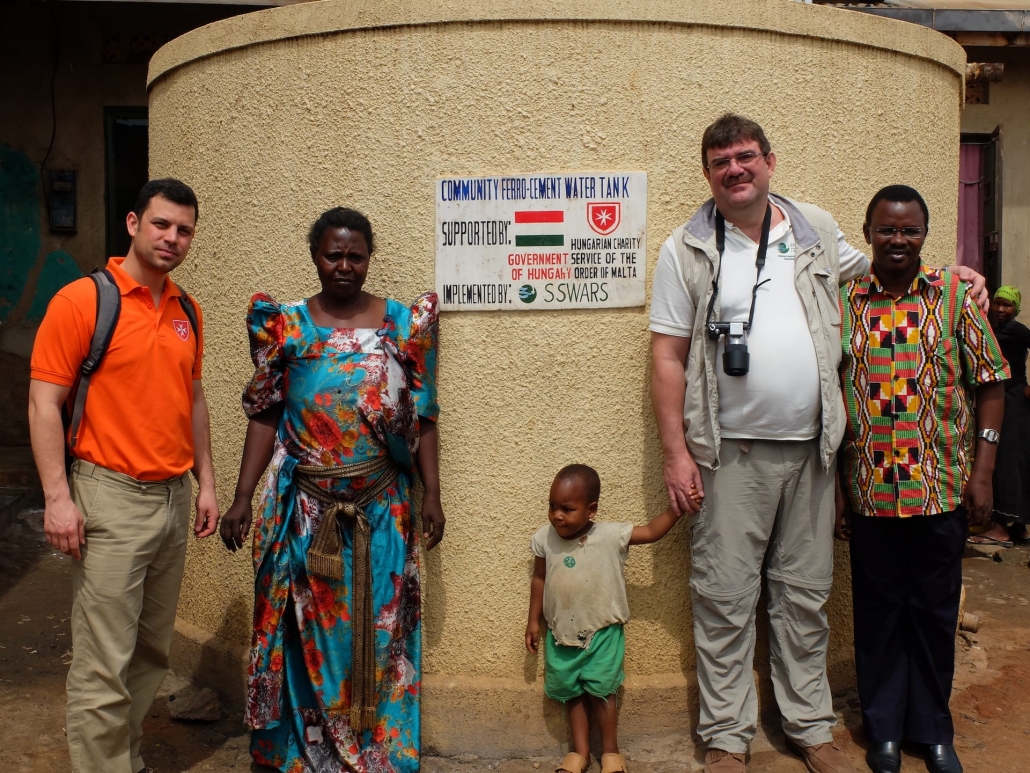
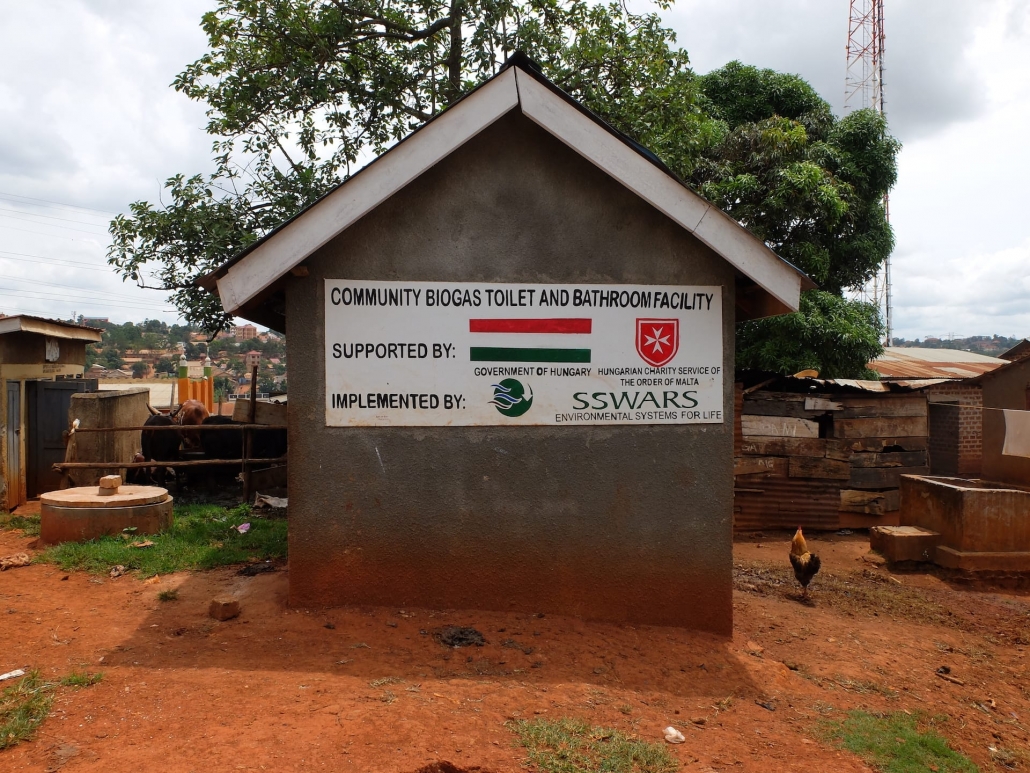
Reliable access to water is ensured through four 2,500-litre cement rainwater harvesting tanks installed for the community. In addition, two biolatrines have been constructed, equipped with flush toilets, sewage systems, and anaerobic digestion units for biogas production and processing.
The programme also includes educational components for local target groups, enabling them to operate the new technologies and apply basic hygiene practices. The centre is connected to an ecological loop sewage system, significantly reducing environmental pressure on the area.
The development initiated by the Hungarian Charity Service of the Order of Malta in Kampala, the capital of Uganda, aims to go beyond the Kenyan sanitation centre model in terms of environmental sustainability: the kiosks constructed using active-house technology have been enhanced with biogas utilisation systems compared to the Kenyan developments. Facilities equipped with “dry toilet” systems use underground composting tanks to separate and process solid and liquid waste. The resulting biogas is channelled into households, where it is used for lighting and cooking, replacing highly polluting fuels such as kerosene and charcoal. As in the Kenyan projects, this approach generates multiple positive impacts, particularly in terms of improving public health conditions.
GALLERY
The programme in pictures

National Headquarters
Department of Foreign Affairs
Hungary, 1011 Budapest, Bem rakpart 28.
Tel.: +36-1-391-4700
Fax: +36-1-391-4728
E-mail: nemzetkozi@maltai.hu